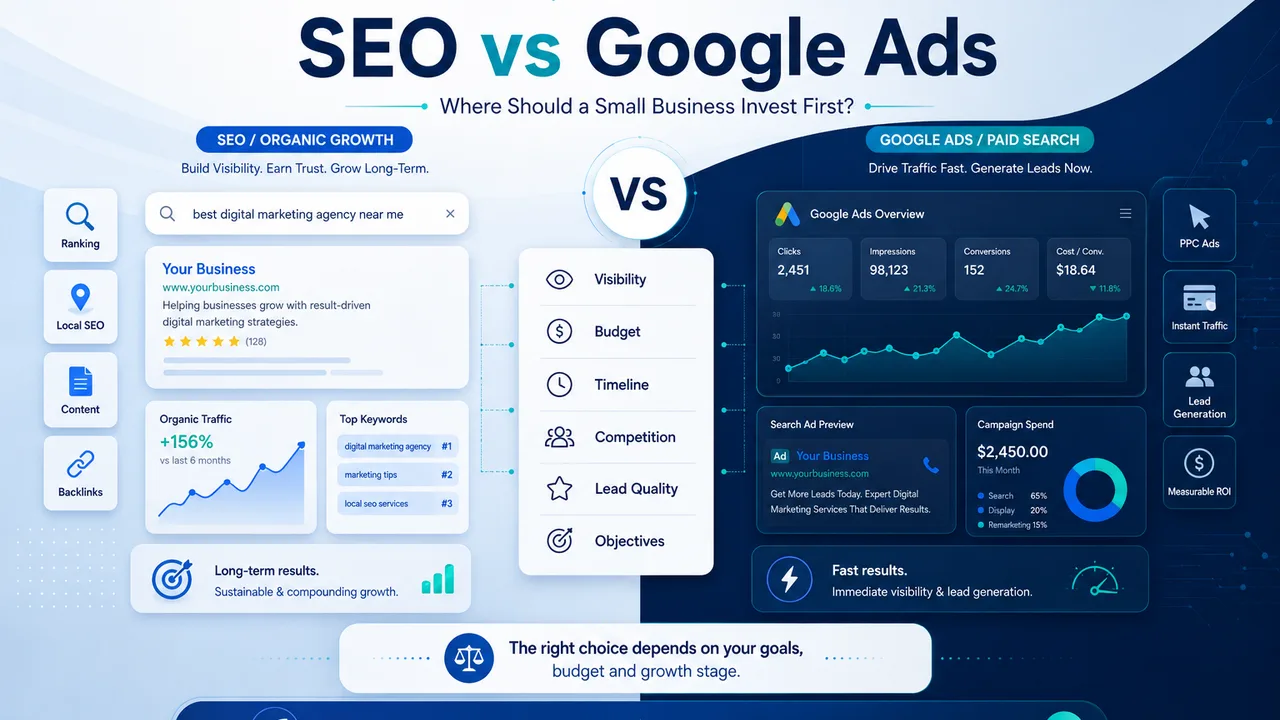
Small businesses often ask whether they should spend their first digital-marketing budget on SEO or Google Ads. The practical answer depends on how quickly you need enquiries, how competitive your market is and whether your website is ready to convert visitors.
Google Ads can place your business in front of people actively searching for a service, while SEO builds unpaid visibility over time. The right starting point is determined by your business objective—not by which channel is currently receiving more attention.
SEO and Google Ads Solve Different Problems
SEO improves your website’s organic visibility through useful content, technical improvements, local relevance and authority. It usually requires patience, but successful pages can continue attracting visitors without paying for every click.
Google Ads provides paid visibility. You choose your targeting, budget and campaign objectives, then pay to compete for relevant searches. It is useful when you need faster market feedback, seasonal enquiries or immediate leads.
| Factor | SEO | Google Ads |
|---|---|---|
| Visibility | Organic search results | Sponsored placements |
| Timeline | Usually gradual | Can begin quickly |
| Cost model | Content and optimization investment | Pay for clicks or conversions |
| Best use | Long-term demand generation | Immediate, controlled campaigns |
| Main risk | Slow execution or weak content | Wasted spend from poor targeting |
Which Should You Choose First?
Choose Google Ads First When
Google Ads may be the better starting point when you are launching a new service, entering a competitive city, promoting a limited-time offer or need enquiries quickly. It can also help test which keywords, locations and messages generate qualified leads.
However, ads cannot repair a weak website. If the landing page is slow, unclear or missing trust signals, higher traffic may simply increase wasted spend.
Choose SEO First When
SEO is often suitable when customers regularly research your service, your business has a clear area of expertise and you can invest consistently in website improvements. It is particularly valuable for service pages, educational content and local searches.
The common mistake is expecting SEO to deliver instant results. Publishing generic blogs without improving technical performance, service-page quality or internal linking rarely creates a strong foundation.
The Best Approach Is Usually a Planned Combination
A small business can use Google Ads to capture immediate demand while SEO develops. Advertising data can reveal valuable search terms and customer concerns. Those insights can then guide service pages, FAQs and blog topics.
For example, a Jaipur interior-design company might advertise for “office interior designer Jaipur” while building detailed pages about office-renovation costs, timelines and project planning. Ads support short-term enquiries, while SEO creates longer-term visibility.
The Gosotek Perspective
Do not divide your budget equally by habit. First define whether the priority is immediate leads, market testing, local visibility or sustainable website traffic. Then assess your website, competition, conversion tracking and available monthly budget.
The right first investment is the channel that matches the business constraint—not the channel receiving the most attention online.
Frequently Asked Questions
Is SEO cheaper than Google Ads?
SEO avoids paying for each click, but it still requires investment in content, technical work and ongoing improvement.
How quickly can Google Ads generate leads?
Campaigns can start receiving traffic quickly, but qualified results depend on targeting, landing pages and conversion tracking.
Can a small business run SEO and Ads together?
Yes. Ads can capture immediate searches while SEO builds longer-term visibility.
Which channel produces better-quality leads?
Lead quality depends more on search intent, messaging, qualification and the offer than on the channel alone.
Conclusion
Choose Google Ads for controlled, faster demand capture and SEO for sustainable organic growth. For many small businesses, the strongest plan uses both channels in carefully defined roles.