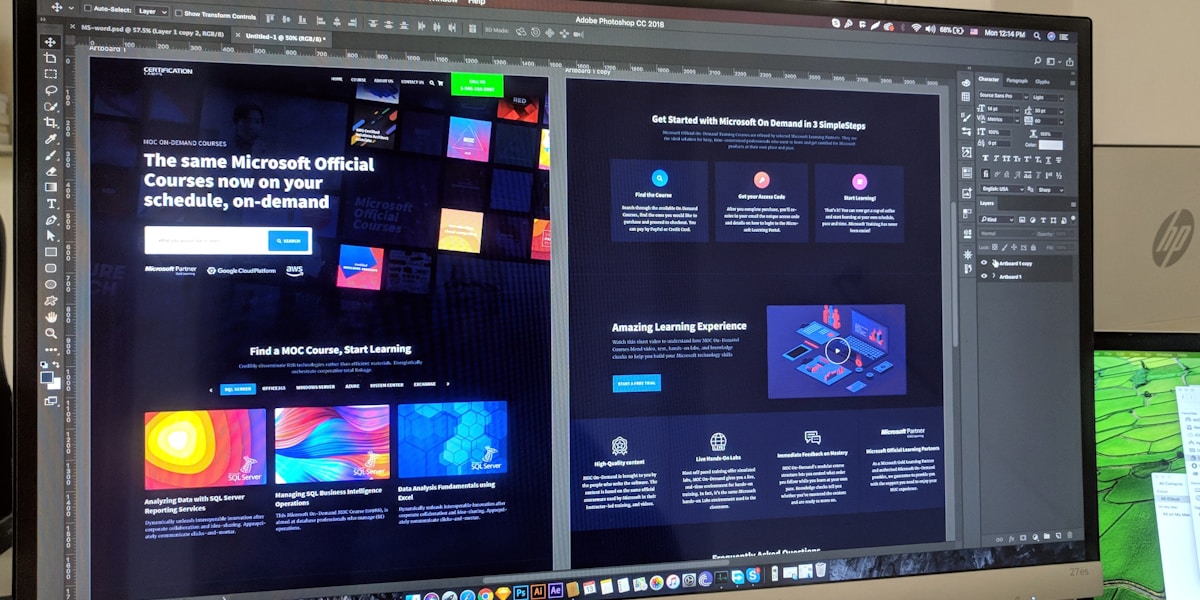
In today's digital-first business landscape, your landi ng page often serves as the first impression potential customers have of your company. Whether you're launching a new product, promoting a service, or captu ring leads for your sales pipeline, a well-designed landing page can be the di fference between a bounce and a conversion. At Gosotek, we've helped countless businesses transform their online presence through strategic landing page opti mization. In this comprehensive guide, we'll walk you through the essential el ements that make landing pages not just visually appealing, but highly effecti ve at driving results.
Start with a Crystal-Clear Value Proposition
Before you write a single line of code or choose a color scheme, you need to answer one fundamental question: What unique value does your offer provide? Your value proposition should immediately communicate what v isitors will gain by staying on your page. This isn't just about listing featu res—it's about articulating the transformation your product or service enables . The most effective landing pages convey this value within the first few seco nds of a visitor's arrival. Place your primary headline prominently above the fold, ensuring it's benefit-driven rather than feature-focused. For example, i nstead of "Cloud Storage Solutions," try "Never Lose Another File with Secure, Instant Access from Anywhere."
Craft Headlines That Capture Attention
Your headline is arguably the most critical element on your landing page . Studies show that 80% of visitors read headlines, but only 20% conti nue reading the rest of the content. This means your headline must wo rk harder than any other element to capture attention and encourage further en gagement. Effective headlines are specific, benefit-oriented, and create curio sity without being clickbaity. Consider using numbers, asking questions, or ma king bold promises that your content can actually deliver. Subheadlines should expand on the headline, providing additional context and reinforcing the prima ry message. Remember, clarity always trumps cleverness—if visitors can't immed iately understand what you're offering, they'll leave before discovering how g reat your product actually is.
Design for Visual Hierarchy and Flow
Human attention spans are shorter than ever, which means your landing page must guide visitors through information in a logical, visually intuitive manne r. Visual hierarchy refers to the arrangement of elements that leads the eye n aturally from the most important information to supporting details. Start with size and contrast—your headline should be the largest text element, followed b y subheadings and body copy. Use white space strategically to prevent cognitiv e overload and help important elements stand out. Color psychology plays a crucial role here; choose a primary color that evokes the emotio ns you want associated with your brand, and use contrasting colors for your ca ll-to-action buttons. The path from headline to value proposition to CTA shoul d feel effortless, removing any friction that might cause visitors to drop off .
Optimize Your Call-to-Action for Maximum Impact
Your call-to-a ction (CTA) is where the magic happens—it's the moment of truth when visitors decide whether to engage with your offer. Effective CTAs are specific, action- oriented, and create a sense of value or urgency. Instead of generic buttons l ike "Submit" or "Click Here," use descriptive language that reinforces the ben efit: "Get My Free Quote," "Start Saving Today," or "Download the Guide Now." Consider these best practices for CTA optimization:
- Use con trasting colors that make your button impossible to miss
Keep the button text concise—ideally between two to five words - Position CTAs strategically throughout the page, not ju st at the bottom
- Reduce form fields to the absolute m inimum required information
- Include trust indicators near your CTA, such as security badges or satisfaction guarantees
Remember, every additional field in your form or extra step in your process in creases the likelihood of abandonment. Make conversion as frictionless as poss ible.
Build Trust Through Social Proof and Credibility
In an era of skepticism and information overload, visitors need reassurance that you're legitimate and your offer delivers on its promises. Social proof is one of the most powerful psychological triggers for conversion. Incorpo rate customer testimonials that are specific, authentic, and include real name s and photos when possible. Case studies that demonstrate measurable results p rovide compelling evidence of your capabilities. Trust badges, security certif ications, and logos of well-known clients or media mentions can significantly boost credibility. Don't forget about the power of statistics—numbers like "Tr usted by 10,000+ businesses" or "98% customer satisfaction rate" provide concr ete validation. Place these trust elements strategically throughout your page, particularly near CTAs where visitors are making their decision.
Ensure Flawless Mobile Responsiveness
With mobile devices accounting for over half of all web traffic, designing for mobile isn't optional—it's essential. A landing page that looks stunning on desktop but breaks on mobile is leaving mo ney on the table. Mobile optimization goes beyond simple resizing; it requires rethinking the entire user experience for smaller screens. Buttons must be lar ge enough for thumb-tapping, text must be readable without zooming, and forms should be streamlined for mobile input. Consider using click-to-call buttons f or phone numbers and ensuring your page loads in under three seconds on mobile networks. Page speed directly impacts conversion rates; even a one-second delay can reduce conversions by 7%. Test your landing page across multiple devices and browsers to ensure a consistent, seamless experience for every visitor.
Implement Continuous Testing and Optimization
The most successful landing pages aren't created in a single iteration—they're ref ined through ongoing testing and data analysis. A/B testing allows you to comp are different versions of headlines, images, CTAs, and layouts to determine wh at resonates most with your audience. Start with high-impact elements like you r headline and primary CTA, then work your way through smaller details. Use he atmaps and session recordings to understand how visitors actually interact wit h your page, not just how you think they do. Pay attention to analytics metric s like bounce rate, time on page, and conversion rate to identify areas for im provement. Remember that audience preferences change over time, so what works today may need adjustment tomorrow. The best landing pages are living document s that evolve based on real user behavior and business goals.
Conclusio n
Designing an effective landing page is both an art and a science. It requires understanding human psychology, applying design principles, and conti nuously iterating based on data. By focusing on a clear value proposition, com pelling copy, strategic visual hierarchy, optimized CTAs, trust-building eleme nts, mobile responsiveness, and ongoing testing, you can create landing pages that don't just attract visitors—they convert them into customers. At Gosotek, we specialize in helping businesses develop digital strategies that drive meas urable results. Whether you're building your first landing page or looking to optimize an existing one, remember that every element should serve a single pu rpose: guiding visitors toward taking action. Start implementing these princip les today, and watch your conversion rates soar.