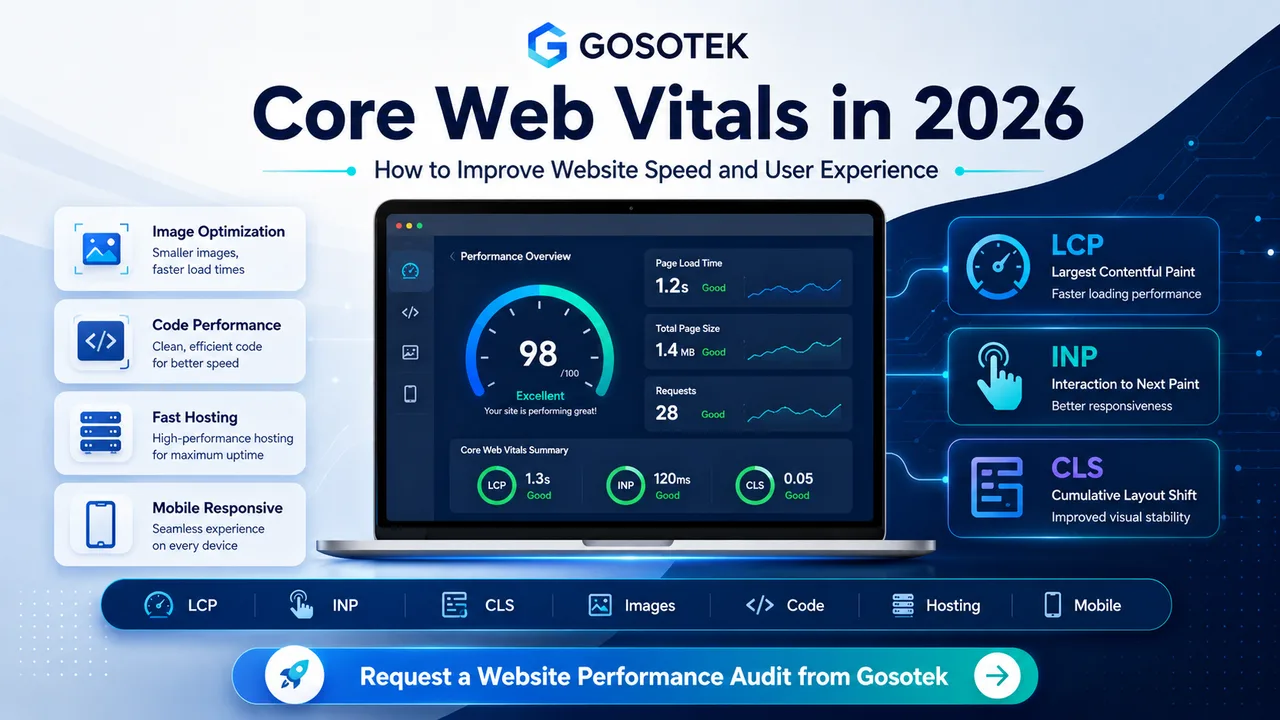
A website can look professional and still lose visitors if it loads slowly, responds late or shifts while someone is trying to click. Core Web Vitals help businesses measure these real-world user-experience problems.
In 2026, Google’s Core Web Vitals are Largest Contentful Paint (LCP), Interaction to Next Paint (INP) and Cumulative Layout Shift (CLS). Together, they measure loading performance, responsiveness and visual stability.
What Do Core Web Vitals Measure?
| Metric | What it measures | Good result |
|---|---|---|
| LCP | How quickly the main visible content loads | 2.5 seconds or less |
| INP | How quickly the page responds to an interaction | 200 milliseconds or less |
| CLS | How visually stable the page remains | 0.1 or less |
These are Google’s recommended thresholds for providing a good user experience.
A slow LCP may leave users waiting for a banner or product image. Poor INP makes buttons and forms feel unresponsive. High CLS can move a button just before the user taps it.
Improve Largest Contentful Paint
LCP is commonly affected by a hero banner, product image or large heading. Use PageSpeed Insights or Chrome DevTools to identify the LCP element before making changes.
Improve it by compressing images, using modern formats such as WebP or AVIF, serving responsive image sizes and preloading important above-the-fold assets when appropriate. The main LCP image should not be lazy-loaded because this can delay when it appears.
Faster hosting, browser caching and a content delivery network can also reduce delays.
A common mistake is installing a speed plugin without checking whether the server, theme or main image is the actual bottleneck.
Improve Interaction to Next Paint
INP measures how quickly a page reacts after a click, tap or keyboard action. Heavy JavaScript and long browser tasks often cause interaction delays.
Remove unused code, split large JavaScript bundles and defer non-essential scripts. Review chat widgets, tracking tags and other third-party tools because they add processing work. Breaking long tasks into smaller tasks also gives the browser more opportunities to respond to users.
For example, a form may appear quickly but still feel broken if the page freezes after the user clicks “Submit.”
Reduce Cumulative Layout Shift
CLS problems occur when content moves unexpectedly. Images without dimensions, late-loading banners, embedded content and web fonts are frequent causes.
Set width and height for images and videos, reserve space for dynamic elements and avoid inserting promotional bars above existing content after loading. Configure fonts carefully so text does not jump when a custom font appears.
Improve Hosting and Mobile Responsiveness
Website performance is not only a design issue. Slow servers, limited hosting resources and distant data centres can delay the first response.
Test the website on mobile devices and slower connections. Use responsive layouts, readable text, properly sized buttons and lighter media. Check important templates such as service, product, blog and checkout pages—not only the homepage.
The Gosotek Perspective
Core Web Vitals should be treated as a diagnostic system, not a one-time score.
Gosotek examines field data, page templates, hosting, images, code and third-party tools together. This identifies the real bottleneck instead of applying generic fixes that may create new performance problems.
Frequently Asked Questions
Do Core Web Vitals affect Google rankings?
They contribute to page experience, but good scores alone do not guarantee higher rankings. Relevant and useful content still matters.
Is a PageSpeed score of 100 necessary?
No. Prioritize passing Core Web Vitals and improving the experience of real visitors.
Why is the mobile result lower?
Mobile testing reflects more limited devices and networks. Oversized media and unnecessary scripts can widen the gap.
Can image compression fix every speed issue?
No. Hosting, JavaScript, CSS, fonts and third-party tools may also require attention.
How often should performance be checked?
Review it after major design, plugin, content or tracking changes, and monitor real-user performance regularly.
Conclusion
Improving LCP, INP and CLS requires coordinated work across design, development, hosting and content. A faster, more stable website makes browsing, enquiries and purchases easier.
Request a website performance audit from Gosotek to identify slow pages, layout shifts and interaction delays, with recommendations based on your website’s actual setup.