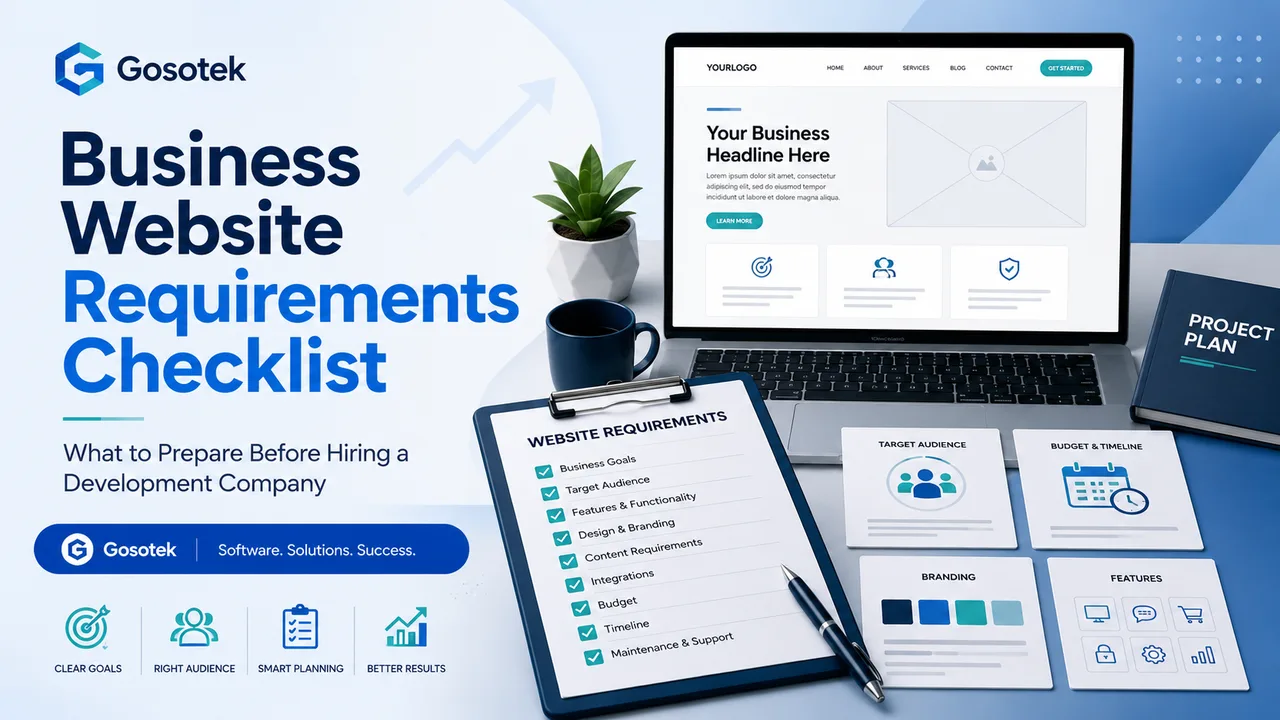
Hiring a website development company before defining your requirements often leads to delays, repeated revisions and unexpected costs. A clear website brief helps the development team understand what your business needs, who the website must serve and what results it should support.
You do not need technical knowledge to prepare it. You only need clarity about your business, customers and priorities.
Why Prepare Website Requirements in Advance?
A website development company can recommend technology, design and features, but it cannot decide your business goals for you.
For example, a manufacturer may need quotation enquiries, while a retail brand may need online payments and inventory management. Both need websites, but their structure and functionality are completely different.
At Gosotek, we treat the website brief as the foundation of the project. It helps align business expectations with design, content, development and budget before work begins.
Downloadable Business Website Requirements Checklist
Use this checklist when preparing your website brief:
| Requirement | What to Prepare |
|---|---|
| Business objectives | Define the primary goal: leads, sales, bookings, credibility or customer support. |
| Target audience | Note customer type, location, needs, questions and buying behaviour. |
| Required pages | List pages such as Home, About, Services, Products, Contact, Blog and FAQs. |
| Content and branding | Collect logo files, colours, fonts, company profile, images, videos and written content. |
| Functional requirements | Identify forms, payment gateway, login, booking, WhatsApp, multilingual support or integrations. |
| Competitor examples | Share websites you like and explain what works well—not only how they look. |
| Budget and timeline | Set a practical investment range, launch deadline and priority features. |
Questions Your Website Brief Should Answer
What action should visitors take?
Decide whether users should call, request a quotation, purchase, book a consultation or visit your location. Each page should guide visitors towards that action.
What content is already available?
Development often slows because logos, service details, images and approvals arrive late. Confirm what is ready, what needs rewriting and whether professional photography is required.
Which features are essential?
Separate must-have features from future features. A service business may initially need enquiry forms and WhatsApp integration, while a customer portal can be added later.
Common Mistakes to Avoid
Do not copy a competitor’s website without considering your own audience. Avoid choosing features only because they look impressive. Do not set a deadline without accounting for content preparation, feedback and testing.
Another common concern is: “What if I do not know exactly what I need?” That is normal. Prepare the business information you know, then ask the development company to recommend the most suitable structure and technology.
Frequently Asked Questions
Do I need all website content before development starts?
Not necessarily, but page topics, key messages and responsibilities should be decided early.
How many pages should a business website have?
It depends on your services and customer journey. Focus on useful pages rather than a fixed number.
Should I mention my budget?
Yes. A budget range helps the company suggest realistic features and avoid unsuitable proposals.
Can features be added later?
Yes, provided the website is planned with future expansion in mind.
Why should I share competitor websites?
They help explain your preferences, market expectations and opportunities for differentiation.
Conclusion
A well-prepared business website requirements checklist saves time, improves quotations and reduces confusion during development. Focus on goals, users, content, essential features, budget and timeline before selecting a website development company.